
If your driveway is looking tired, cracked, or just a bit past its best, you might be surprised how much of a difference a fresh surface can make — not just to the look of your home, but to its value too. The good news is that replacing a driveway doesn’t have to cost a fortune. With the right material choice and a bit of planning, there are some genuinely cost-effective options out there.
We’ve put together this guide to walk you through the most popular budget driveway ideas, what each one involves, and roughly what to expect in terms of cost and maintenance. Whether you’re after a quick refresh or a full replacement, there should be something here that suits your situation.
How Much Does It Cost to Replace a Driveway in the UK?
How Much Does It Cost to Replace a Driveway in the UK?
Before we look at specific materials, it helps to understand what drives driveway costs in the first place. The main factors are:
- The size of your driveway — larger areas need more material and labour
- Groundworks required — if the existing base is poor, excavation adds cost
- The material chosen — there’s a wide range from budget to premium
- Your location — labour rates vary across the UK
As a rough guide, driveway costs typically range from around £40–£150+ per square metre depending on the surface. We’ll give you a clearer picture of where each option sits in that range below.
The Cheapest Driveway Options in the UK
The Cheapest Driveway Options in the UK
1. Gravel — The Most Budget-Friendly Choice
1. Gravel — The Most Budget-Friendly Choice
If keeping costs down is your main priority, gravel is hard to beat. It’s one of the cheapest driveway materials available, and for confident DIYers, it’s also one of the few options you can install yourself.
How it works: You’ll need to dig down a few inches, lay a weed-suppressant membrane, add a sub-base of compacted hardcore or MOT Type 1, then top it with your chosen gravel or shingle. A typical depth of 50–75mm of gravel on top works well for most driveways.
What it costs: Professionally installed, gravel driveways typically come in at around £40–£70 per square metre. DIY costs can be significantly lower if you’re happy to do the groundwork yourself.
Pros:
- Very low upfront cost
- Good natural drainage
- Wide variety of colours and stone types
- Easy to add more gravel when needed
Cons:
- Requires regular raking to keep it tidy
- Gravel can migrate onto paths or lawns over time
- Not ideal if you have steep slopes
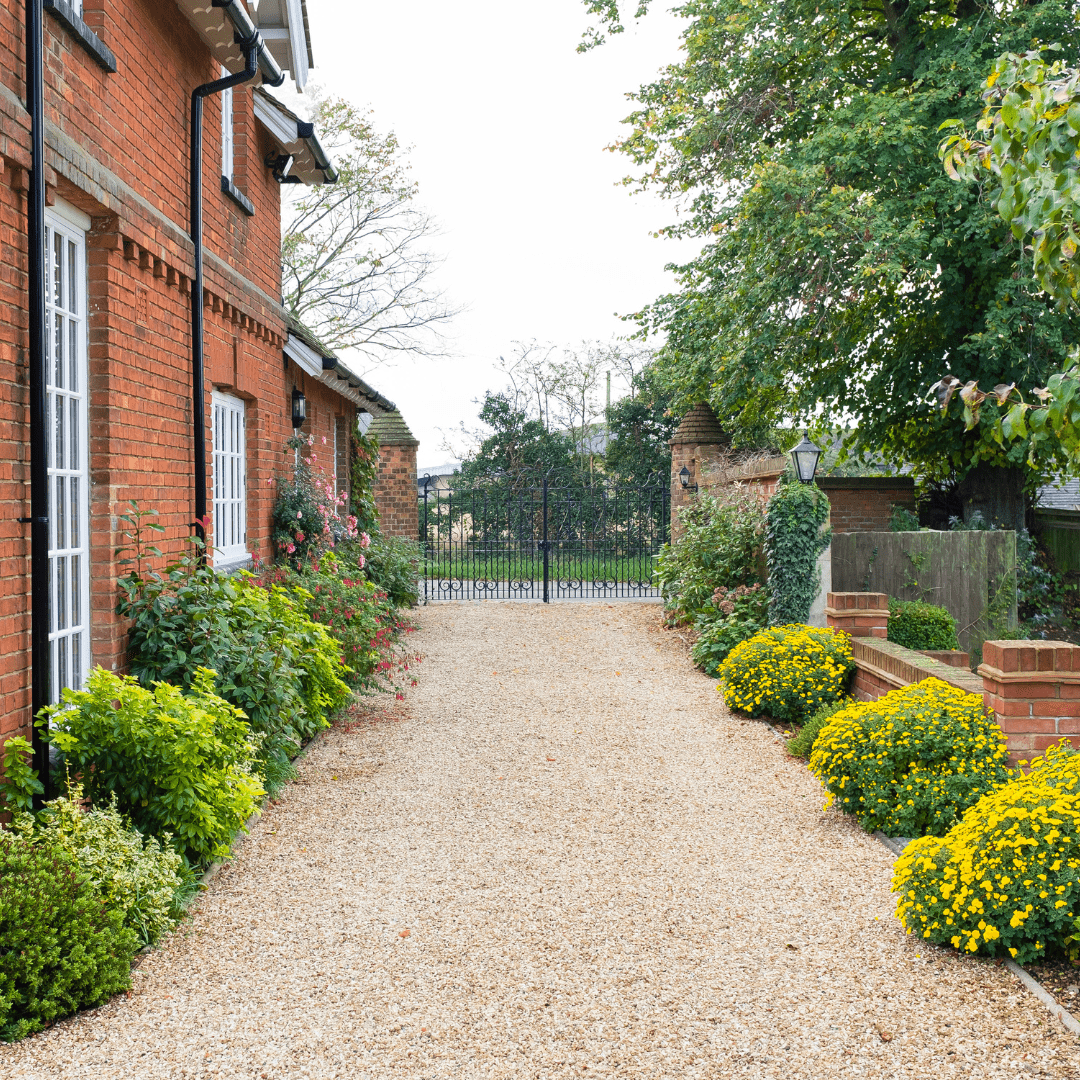
Gravel works particularly well for larger driveways where other materials would become expensive quickly. It gives a pleasant, natural look that suits many properties — especially period homes and rural settings.
2. Tarmac (Asphalt) — A Low-Cost, Hardwearing Classic
2. Tarmac (Asphalt) — A Low-Cost, Hardwearing Classic
Tarmac is one of the most popular driveway surfaces in the UK, and it’s easy to see why. It’s durable, relatively quick to install, and sits comfortably at the affordable end of the market.
How it works: There are two approaches with tarmac. A full installation involves removing the existing surface, installing a new sub-base, and laying fresh tarmac — this is the more durable option. Alternatively, a resurface (laying new tarmac over an existing stable surface) is quicker and cheaper, though it won’t last quite as long.
What it costs: Tarmac driveways typically cost around £50–£80 per square metre for a full installation. Resurfacing can be cheaper, but if the underlying base isn’t solid, you may end up paying more in the long run.
Pros:
- Affordable and widely available
- Quick to install — often done in a day or two
- Smooth, easy-to-clean surface
- Can be edged or bordered to smarten up the finish
Cons:
- Limited colour options (typically black or very dark grey)
- Can soften in extreme heat
- May need resealing every few years to extend its life
For homeowners who want a clean, practical surface at a sensible price, tarmac is often the go-to recommendation. It’s particularly suited to larger driveways and properties where durability matters more than aesthetics.
3. Tar & Chip (Tar & Stone) — Great Value With a Bit More Character
3. Tar & Chip (Tar & Stone) — Great Value With a Bit More Character
Tar and chip — sometimes called macadam or chip and spray — is a surface that often gets overlooked, but it’s well worth considering if you want something more attractive than plain tarmac without stretching to a premium finish.
How it works: A base layer of compacted aggregate is laid first, followed by hot liquid bitumen (tar). Loose aggregate — your choice of colour and stone type — is then spread across the surface and compacted to embed it firmly. The result is a textured, natural-looking surface.
What it costs: Tar and chip typically comes in at around £45–£75 per square metre, making it one of the better-value mid-range options.
Pros:
- More visually interesting than plain tarmac
- Naturally anti-slip surface — great for sloped driveways
- Choice of aggregate colours to complement your home
- Very durable and hard-wearing
- Driveline Surfacing includes a 5-year guarantee on all tar & chip installations as standard
Cons:
- Can lose some surface stones in the first few weeks
- Not suitable for very tight or intricate areas
- Slightly rougher texture than resin or tarmac
Tar and chip is a fantastic choice for homeowners who want a hardwearing, characterful surface at a price that doesn’t break the bank. It’s particularly popular in rural settings where a more natural aesthetic suits the surroundings.
4. Resin Bound — A Long-Term Investment That Pays Off
4. Resin Bound — A Long-Term Investment That Pays Off
Resin bound surfacing sits at the higher end of the cost spectrum, but it deserves a place in any guide to cost-effective driveways — because when you factor in lifespan, maintenance, and planning benefits, it often works out as outstanding value over time.
How it works: Natural aggregate (stone, gravel, or recycled glass) is mixed with a clear polyurethane resin and trowelled onto a prepared base. The result is a smooth, seamless, fully porous surface that allows rainwater to drain directly through.
What it costs: Resin bound driveways typically cost around £70–£120 per square metre — higher upfront, but with a lifespan of up to 25–30 years and very low ongoing maintenance costs.
Pros:
- Extremely low maintenance — no weeding, sealing, or topping up needed
- SUDS compliant (permeable, so no planning permission required in most cases)
- UV resistant — won’t fade or discolour in sunlight
- Wide range of colours and finishes
- Can last 25–30 years with minimal upkeep
Cons:
- Higher upfront cost than gravel or tarmac
- Requires a skilled installer for best results
- Not a DIY option
If you’re thinking long-term, resin bound is one of the most cost-effective choices you can make. The combination of low maintenance, long lifespan, and high kerb appeal makes it a particularly popular choice for homeowners who want to install once and forget about it.
5. Block Paving — Classic, Flexible, and Built to Last
5. Block Paving — Classic, Flexible, and Built to Last
Block paving is a timeless choice that offers a premium look at a price that can be more reasonable than people expect — particularly when you consider how long it lasts and how easy it is to repair.
What it costs: Block paving typically ranges from around £70–£130 per square metre, depending on the brick type and complexity of the pattern.
Pros:
- Can last 20–30+ years with proper installation
- Individual blocks can be replaced if damaged — no need to resurface the whole drive
- Available in a wide range of colours, sizes, and patterns
- Adds significant kerb appeal and can increase property value
- Driveline Surfacing includes a 10-year guarantee on all block paving installations as standard
Cons:
- Higher installation cost than tarmac or gravel
- Weeds can grow between blocks over time if not properly sealed
- Requires a well-prepared sub-base for best results
Block paving is an excellent choice if you’re looking for a classic, high-quality finish that will stand the test of time. The ability to replace individual blocks means repairs are straightforward and inexpensive.
Comparing Driveway Options at a Glance
Comparing Driveway Options at a Glance
| Surface | Typical Cost (per m²) | Lifespan | Maintenance | DIY Possible? |
| Gravel | £40–£70 | 5–15 years | Regular raking | Yes |
| Tarmac | £50–£80 | 15–25 years | Low | No |
| Tar & Chip | £45–£75 | 15–25 years | Very low | No |
| Resin Bound | £70–£120 | 25–30 years | Very low | No |
| Block Paving | £70–£130 | 20–30+ years | Low–medium | With experience |
Do You Need Planning Permission for a New Driveway?
Do You Need Planning Permission for a New Driveway?
In most cases, you don’t need planning permission to replace or install a driveway in front of your house in England — provided the surface is permeable (allows water to drain through) or water is directed to a lawn or border where it can drain naturally.
If you’re installing an impermeable surface (such as standard tarmac or concrete) over 5 square metres, you will need permitted development rights or planning permission.
Resin bound, gravel, and tar & chip surfaces are all permeable, which means they’re usually compliant with permitted development rules without any additional paperwork.
If you’re unsure, it’s always worth checking with your local planning authority — or just ask us and we’ll be happy to advise.
Tips for Keeping Driveway Costs Down
Tips for Keeping Driveway Costs Down
Replacing a driveway doesn’t have to mean spending more than you need to. Here are a few practical tips:
- Get at least three quotes — prices can vary considerably between contractors
- Consider your existing base — if it’s in good condition, a resurface may be enough
- Think long-term — a cheaper material with higher maintenance costs can work out more expensive over 10–15 years
- Avoid unnecessary extras — edging, drainage, and lighting can all add up; focus on what you actually need
- Time your project — some contractors offer better rates in quieter months (typically winter)
Frequently Asked Questions
Frequently Asked Questions
What is the cheapest driveway to install in the UK? Gravel is generally the cheapest driveway option, particularly if you’re willing to do some or all of the work yourself. For a professionally installed hard surface, tarmac and tar & chip are typically the most affordable options.
Is it cheaper to tarmac or block pave a driveway? Tarmac is usually cheaper to install than block paving, often by £20–£50 per square metre. However, block paving lasts longer and can be repaired more easily, so the gap in total cost over the lifetime of the driveway can narrow significantly.
How long does a budget driveway last? It depends on the material and the quality of installation. Gravel may need topping up every 5–10 years, whereas a well-installed tarmac or tar & chip surface should last 15–25 years with minimal maintenance.
Can I install a driveway myself to save money? Gravel is the most realistic DIY option for most homeowners. Other surfaces — particularly resin bound, tarmac, and tar & chip — require specialist equipment and skills, and a poor installation can end up costing more to put right than hiring a professional from the outset.
Will a new driveway add value to my home? Yes — a well-installed driveway can add meaningful value to a property, particularly if the existing surface is in poor condition. A smart, low-maintenance finish like resin bound or block paving is especially attractive to buyers.
Ready to Explore Your Options?
Ready to Explore Your Options?
If you’re based in Norfolk, Suffolk, Cambridgeshire, Lincolnshire, or Essex and you’re thinking about replacing or refreshing your driveway, we’d love to help. At Driveline Surfacing, we’ve been helping homeowners across East Anglia find the right surface for their budget and their property for years.
We’re happy to talk through your options without any pressure, and we offer free, no-obligation quotes on all our surfaces — including tarmac, tar & chip, resin bound, and block paving.
Get in touch with our team today or give us a call to arrange a visit. We’ll take a look at what you’ve got, talk through what we think would work best, and give you a clear, honest price.